BAPTISM AND GREEK MIDDLE
|

|
Greek Middle Function |
English Strategy |
|---|---|
|
Reflexive |
“I wash myself,” “He prepared himself” |
|
Self-benefactive |
“I got myself ready,” “I chose” |
|
Deponent |
Active verb: “I go,” “I come,” “I choose” |
|
Reciprocal |
“They hugged each other” |
|
Passive-like |
“I am baptized,” “It is opened” |
|
Spontaneous / Intransitive |
“I wake up,” “It appears” |
✔️ Practical rule used by translators
Translate the meaning, not the form. Ask: Is the subject acting on themselves, for themselves, or being affected? Then choose the English structure that best expresses that relationship.
Here are some concrete New Testament examples where the Greek middle voice affects translation. We’ll see what the Greek form is doing and how English must adjust to capture the meaning—since English has no true middle voice.
1. ἔρχομαι — “I come / I go”
I am coming
I come
Greek form: present middle/passive Example: John 14:3
3 And if I go and prepare a place for you, I will come again, and receive you unto myself; that where I am, there ye may be also.ὅτι ἔρχομαι
Meaning: The subject (Jesus in the context here) is involved in the action—movement that concerns the subject personally.
English translation:
Why middle? Greek treats motion verbs as “self-involving.” English simply uses its active voice. Nevertheless, knowing that Jesus expressed it in middle voice would add meaning to the statement. Jesus is involved in definitely coming!
2. βαπτίζομαι — “I am baptized / I get baptized”
He was baptized (passive)
He got baptized (middle nuance)
Greek form: middle/passive Example: Mark 1:9 "And it came to pass in those days, that Jesus came from Nazareth of Galilee, and was baptized of John in Jordan."
Ἰησοῦς… ἐβαπτίσθη
Meaning: Jesus undergoes baptism; the action affects him.
English translation:
Why middle? The subject participates in the event although He is not the agent. English uses English's passive or get + verb in order to translate the meaning for us that He was involved.
|
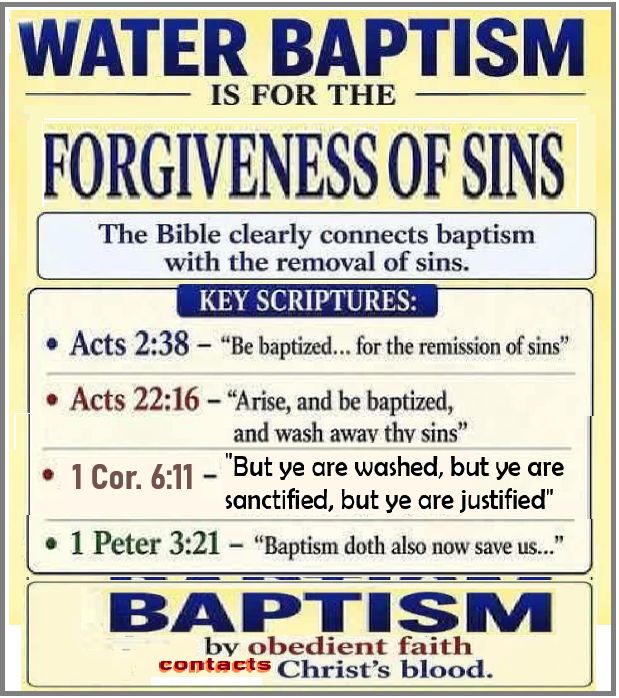
1 Cor. 6:11
"you were washed" Abbott-Smith's Manual Greek Lexicon of the New Testament G628 [in LXX Greek translation of OT: Job 9:30 (H7364)*; Job 9:30 "If I wash myself with snow water, and make my hands never so clean;" ] to wash off, wash away; mid., metaph., c. acc rei, to wash off oneself: Acts 22:16 [Paul is commanded: "And now why tarriest thou? arise, and be baptized*, and wash away* thy sins, calling on the name of the Lord."]; absol., , ye washed yourselves clean (cf. Cremer, 406), 1 Cor. 6:11. *Acts 22:16Part of Speech: Verb Tense: Aorist Mood: Imperative (command) Voice: Middle [participant] Person: 2nd Person (you) Number: Singular |
3. ἠγέρθη — “He was raised / He rose”
He has been raised (passive)
He rose (middle/intransitive)
Greek form: aorist middle/passive Example: Matthew 28:6 "He is not here: for he is risen, as he said. Come, see the place where the Lord lay."
οὐκ ἔστιν ὧδε· ἠγέρθη
Meaning: Could be passive (“was raised”)
or middle (“rose”), depending on theology/context.
English translation:
Why middle? Resurrection is an event in which the subject is deeply affected. English chooses based on context. However, remember that Jesus claimed to have power to raise Himself. John 10:18, "I have power to lay down My life, and I have power to take it again." So, middle would be appropriate.
4. τὸν ἐπενδύτην διεζώσατο — “I wrap myself / I put on clothing”
He put on his outer garment
He wrapped himself in his garment (explicit reflexive)
Greek form: middle Example: John 21:7 "Therefore that disciple whom Jesus loved saith unto Peter, It is the Lord. Now when Simon Peter heard that it was the Lord, he girt his fisher's coat unto him, (for he was naked,) and did cast himself into the sea."
τὸν ἐπενδύτην διεζώσατο
Meaning: Peter girds himself—action done for himself.
English translation:
Why middle? Self-benefactive. English uses reflexive or idiomatic active.
5. ἀποκρίνομαι — “I answer”
Jesus answered and said
Greek form: middle (deponent) Example: Matthew 11:25 25 At that time Jesus answered and said, I thank thee, O Father, Lord of heaven and earth, because thou hast hid these things from the wise and prudent, and hast revealed them unto babes
ὁ Ἰησοῦς ἀποκριθεὶς εἶπεν
Meaning: Jesus responds—an internal, self-involved action.
English translation:
Why middle? Greek views answering as a self-involved act. English uses active.
6. φοβέομαι — “I fear / I am afraid”
Do not be afraid
Greek form: middle (deponent) Example: Matthew 1:20 "But while he thought on these things, behold, the angel of the Lord appeared unto him in a dream, saying, Joseph, thou son of David, fear not to take unto thee Mary thy wife: for that which is conceived in her is of the Holy Ghost."
μὴ φοβηθῇς
Meaning: The subject experiences fear internally.
English translation:
Why middle? Emotion verbs often take middle voice. English uses be + adjective.
7. καυχάομαι — “I boast”
We boast
We rejoice (contextual)
Greek form: middle (deponent) Example: Romans 5:3 "And not only so, but we glory in tribulations also: knowing that tribulation worketh patience;"
καὶ καυχώμεθα
Meaning: Boasting is self-referential.
English translation:
Why middle? The action reflects back on the subject. English uses active.
8. ἁγνίζομαι — “I purify myself”
Purify yourself
Greek form: middle Example: Acts 21:24 "Them take, and purify thyself with them, and be at charges with them, that they may shave their heads: and all may know that those things, whereof they were informed concerning thee, are nothing; but that thou thyself also walkest orderly, and keepest the law."
καὶ ἁγνίσθητι
Meaning: Ritual purification done by and for oneself.
English translation:
Why middle? Reflexive. English uses reflexive pronoun.
9. ἱλάσκομαι — “I make atonement / I propitiate”
to make propitiation
to make atonement
Greek form: middle Example: Hebrews 2:17, "Wherefore in all things it behoved Him to be made like unto His brethren, that He might be a merciful and faithful high priest in things pertaining to God, [Jesus] to make reconciliation for the sins of the people."
εἰς τὸ ἱλάσκεσθαι
Meaning: The priest performs atonement on behalf of others, but the middle voice shows personal involvement in the ritual.
English translation:
Why middle? Ritual involvement. English uses active.
Why middle? The subject receives the benefit. English uses passive.
Summary: What these examples show
Greek middle voice therefore expresses:
Reflexive action (purify yourself)
Self-benefactive action (put on clothing)
Internal emotion (fear)
Personal involvement (answering, boasting)
Spontaneous/intransitive action (rise)
Passive-like reception (be baptized, be saved)
English must choose active, reflexive, passive, or idiomatic forms depending on context. It is important therefore for the student or teacher to consider this in harmonizing a doctrine. For example: 1 Cor. 6:11; is one required to be baptized in order to be sanctified and justified.
Unsatisfactory translations for 1 Corinthians 6:11, but some of the better.
Common English Bible w/ Apocrypha, "That is what some of you used to be! But you were washed clean, you were made holy to God, and you were made right with God in the name of the Lord Jesus Christ and in the Spirit of our God."
The Complete Jewish Bible "Some of you used to do these things. But you have cleansed yourselves, you have been set apart for God, you have come to be counted righteous through the power of the Lord Yeshua the Messiah and the Spirit of our God."
Good News Translation "Some of you were like that. But you have been purified from sin; you have been dedicated to God; you have been put right with God by the Lord Jesus Christ and by the Spirit of our God."
New International Reader's Version "Some of you used to do those things. But your sins were washed away. You were made holy. You were made right with God. All of that was done in the name of the Lord Jesus Christ and by the Spirit of our God."

|