|
A
Poor Widow Brings Her Gift Jesus commends a poor
widow for her gift. Mark 12:41-44; Luke 21:1.4
THE
SETTING This event very likely took
place almost at the close of Jesus' public activity in Jesus had been teaching in the court of the temple.
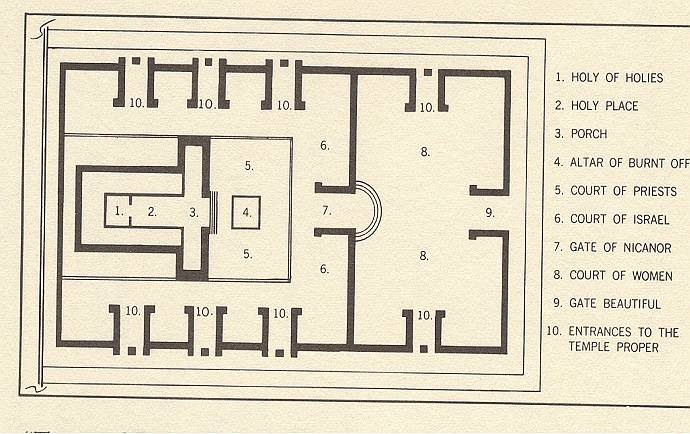
Probably this was somewhere in the large courtyard known as Court of the
Gentiles (see sketch). Earlier in the day a delegation of Pharisees and of the Herodians had tried to trap Jesus by asking Him whether it
was right to pay taxes to the Roman government. After this the Sadducees asked
Him about the resurrection of the dead. Then Pharisees came to ask Jesus about
the great commandment of the Law. After these experiences, Jesus asked the Pharisees
from whom the Messiah would be descended. When they answered "The son of David," Jesus quoted them Psalm 110:
1 and asked them a second
question. This silenced those who would have liked to trap Him. Jesus then pronounced
woes on the Pharisees
and the specialists in the Law. Note that in Luke 20:47 Jesus said that these swallow the widows'
houses and then, to cover up, make long prayers. THE
TREASURY Seemingly Jesus and His disciples then went into the inner
part of the temple into
a court known as the Court of Women. From this court a flight of steps led up to a
second court known as the Court of Israel. Except for special purposes, women were not
permitted to enter the Court of Israel but followed the
worship from the Court of Women. A
colonnade was built all around the walls of the Court of the Women. Somewhere under this
colonnade were mounted thirteen chests. These were in the form of a trumpet. Each of these was clearly labeled to show which offering might be put
into it. Seven of these
were labeled for required gifts; six of them were for voluntary offerings. Some commentators suggest that a priest stood at each
of the offering trumpets. Each person bringing an offering was asked to state
the amount and the purpose for which the offering was intended. Whether this
suggestion is what was commonly done is difficult to establish. JESUS
WATCHES Jesus watched people bring offerings. Some brought
much, and as Jesus emphasized to His disciples later, this came from their
"leftovers." But a widow came who brought the minimum gift permitted:
two small coins known as mites. Although some have tried to give the value of
this coin in terms of our money today, this can be deceiving because of the
greater purchasing power of money at that time. The two mites amounted to
1/64th of a day laborer's pay at that time. When Jesus saw the widow and knew what she had given,
He told His disciples, that this poor widow had certainly put in more than all
the others. All the others took some of what they had left over and dropped it
in among the gifts, but she put in what she needed for herself, all she had to
live on. The Greek term for "what she needed for herself" means more
than just poverty; it means “lack, want, destitution.” Even in her desperately poor condition, the widow
gladly came and gave all she had to God. The greatness of her deed and of her
love and gratitude to God may be more meaningful to us if we remember that
these two mites amounted only 1/ 64th of a day
laborer's pay!
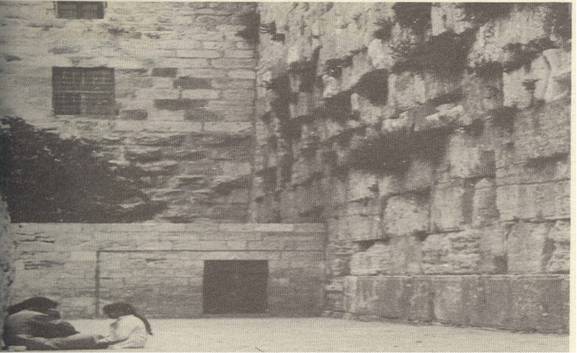
These huge stones once
were part of the tempie wall of Jesus' day
(lately determined to have been support for the extended temple area). (TWA Pix) Photo credits: Matson Photo Service
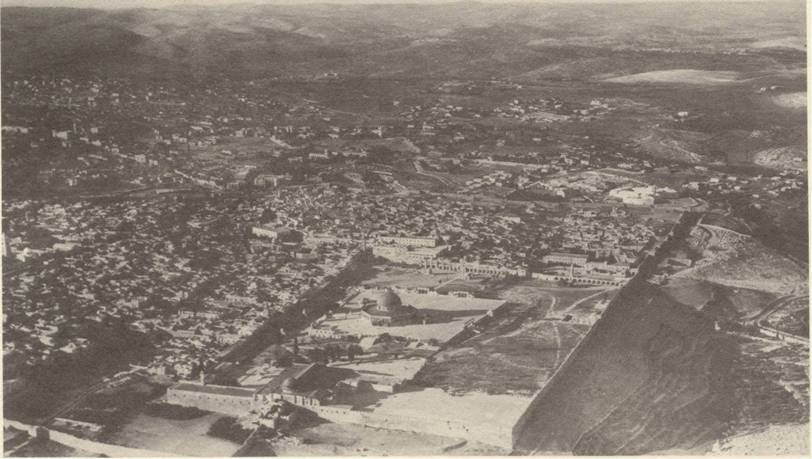
Air view of the
Diagram of temple. Women’s
Court is #8. |